Preparing the Body for the Demands of the Job
Being Strong When You're Fresh Isn't Enough
One of the biggest considerations when rehabilitating a firefighter is fatigue.
Imagine I am rehabilitating a firefighter following a knee injury. In the clinic, I might ask them to step onto an 18-inch box while I evaluate strength, control, and range of motion.
When they are rested, they may perform that movement perfectly.
But that does not necessarily tell me what I need to know.
On the job, firefighters are not guaranteed to encounter the most physically demanding part of an emergency while they are fresh. They may have already climbed stairs, carried equipment, pulled hose, or worked for an extended period before suddenly needing that injured leg to perform.
For a firefighter, the question is not only whether the body can perform a task. It is whether it can still perform that task safely when fatigue sets in.
Testing the Body Under Fatigue
That is why I may deliberately fatigue a firefighter before asking them to perform an important movement.
I want to know what happens when their heart rate is elevated, their muscles are tired, and then they are asked to perform the task we are concerned about.
- Can the knee still control the movement?
- Can the leg still generate the necessary force?
- Can they maintain balance and coordination?
- Can they still move safely and effectively?
That gives us much more useful information than simply watching the firefighter perform an exercise at the beginning of a therapy session.
Rehabilitation Should Reflect the Job
Firefighting involves physical demands that simply do not exist in most occupations.
Consider something as basic as carrying a hose.
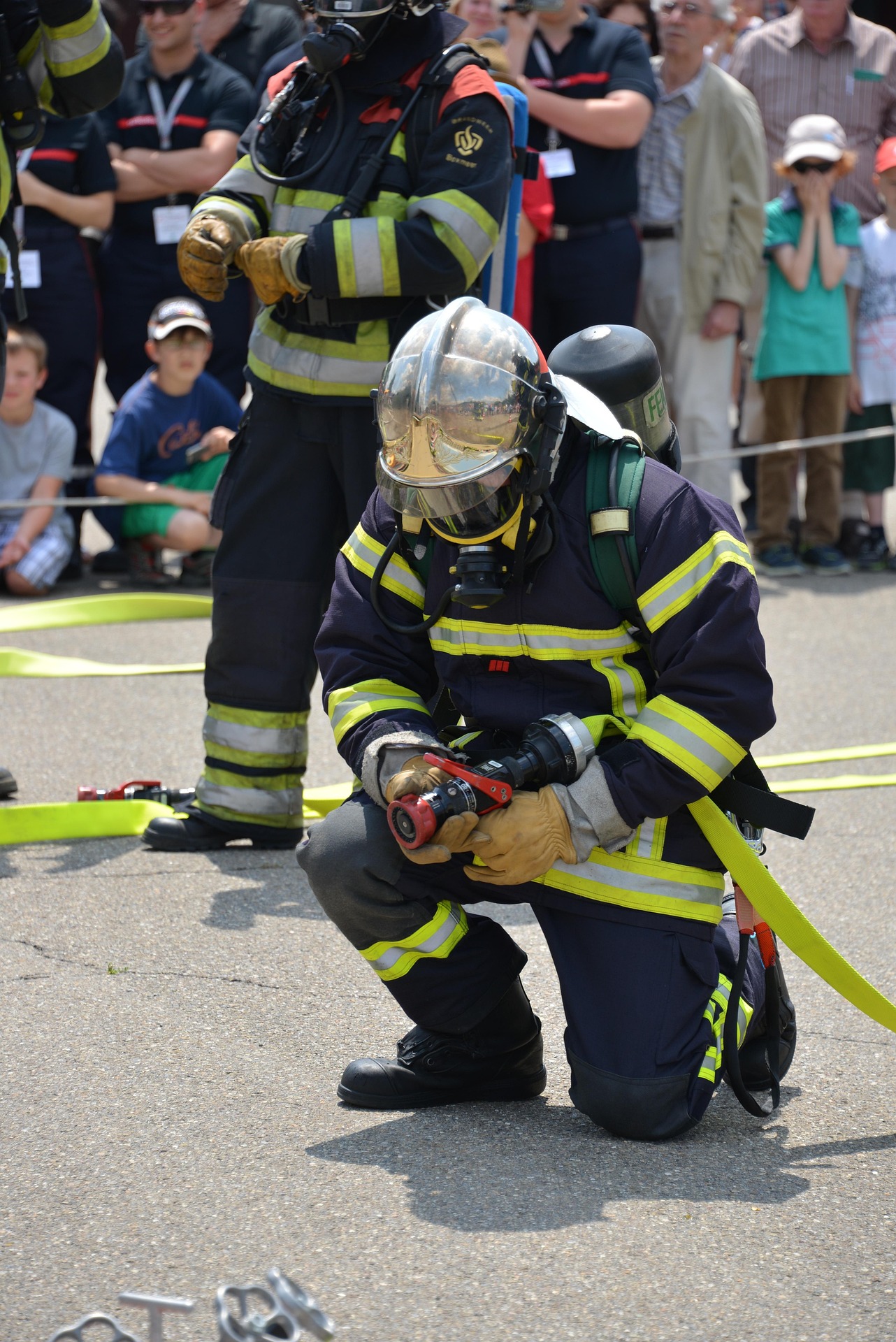
A firefighter may need to carry a substantial load on one shoulder, move it a considerable distance, and then continue up a flight of stairs.
In rehabilitation, we can begin recreating those demands.
That might mean placing a 75- or 100-pound sandbag on the firefighter's shoulder and having them carry it for distance. Once they finish the carry, we might transition immediately into repeated step-ups on an 18-inch box.
Now we are no longer simply testing whether the firefighter can lift a weight.
- Load
- Endurance
- Stair climbing
- Fatigue
- Balance
- Movement control
Those demands begin to look much more like the realities of the job.
Sometimes the Demands Are Extreme
Firefighters also have to be physically prepared for situations that may happen only once in a career.
One example involved firefighters responding to a rescue approximately 275 feet up a cell tower after a climber experienced a medical emergency.
That is an extraordinary physical demand.
But someone still has to be capable of making the climb and performing the rescue.
Firefighters may encounter situations involving extensive ladder climbing, pulling, carrying, lateral movement, awkward positions, and work at significant heights.
The challenge is that we cannot predict exactly what the next call will require.
Firefighters Are Not Returning to One Repetitive Task
That unpredictability is part of what makes firefighter rehabilitation different.
We are not preparing someone to return to one repetitive movement or one controlled work environment.
We are preparing them to return to a profession in which the physical requirements may change dramatically from one call to the next.
One call may require climbing multiple flights of stairs. Another may require carrying equipment, dragging a person, pulling hose, working from a ladder, or maintaining an awkward position for an extended period of time.
Fatigue Changes Everything
This is why rehabilitation for firefighters needs to go beyond simply getting someone pain-free.
Being able to lift something when you are fresh is one thing.
Being able to lift it after climbing stairs while carrying equipment is another.
If I only evaluate the firefighter in a controlled, rested environment, I may never expose the limitation that will matter when they are back on duty.
A more job-specific rehabilitation session allows us to create fatigue deliberately and then evaluate the movements that matter most.
Individualized Rehabilitation Matters
This is also where one-on-one time becomes especially valuable.
I can structure the session around that firefighter's specific injury, responsibilities, and return-to-duty concerns rather than simply moving through a standard list of exercises.
The exact exercise is not always the most important part.
The important part is understanding what that individual firefighter needs to be capable of doing and progressively preparing them for those demands.
Physical Readiness Builds Confidence
There is also a psychological component to returning to work after an injury.
A firefighter should not have to encounter an emergency and wonder whether the injured knee, shoulder, back, or ankle is going to hold up.
Rehabilitation gives us an opportunity to answer some of those questions before the firefighter returns to full duty.
If we have progressively loaded the injured area, worked under fatigue, and practiced carrying, climbing, pulling, stepping, and other relevant movements, the firefighter has evidence that their body can perform.
- They have already challenged the injury.
- They have already experienced fatigue.
- They have already performed difficult tasks successfully.
That can provide something beyond strength and mobility.
It can restore confidence in the body's ability to respond when it matters most.
The Goal Is Readiness
Firefighters do not get to choose what the next call demands.
It could be relatively routine. It could involve climbing multiple flights of stairs. It could require carrying someone to safety. It could involve a ladder, a hose, forced entry, or a rescue hundreds of feet above the ground.
That is why returning a firefighter to work requires a different mindset.
The goal is not simply to complete physical therapy.
The goal is to prepare that firefighter for the unpredictable physical demands of the job—and to make sure that when they are needed, their body is ready to respond.