Golf Performance & Injury Prevention
The Most Common Problem We See in Golfers
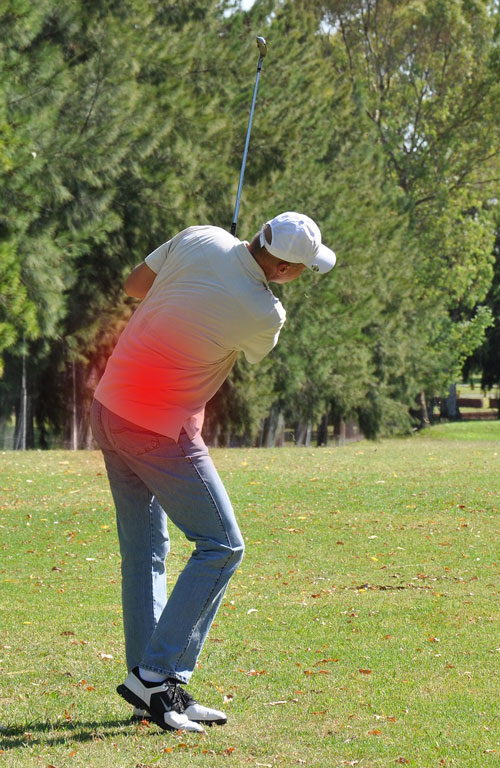
If there's one area of the body that tends to give golfers trouble, it's the lower back.
Many golfers begin playing more frequently during retirement or after their careers slow down. While golf is often viewed as a low-impact activity, it places significant demands on the body—especially the spine.
Golf is a rotational sport. Every swing requires the body to rotate forcefully in the same direction over and over again. If the spine, hips, or surrounding muscles lack mobility, the body begins to compensate.
In many cases, the back becomes the weak link in the chain.
Why Rotation Matters
Unlike sports that involve movement in multiple directions, golf largely repeats the same rotational pattern throughout a round.
When the body cannot rotate efficiently, stress is transferred elsewhere. The result can be:
- Low back pain
- Hip tightness
- Shoulder discomfort
- Elbow pain
- Reduced swing efficiency
- Loss of distance and consistency
Every Golfer Is Different
There is no single exercise or stretch that fixes every golfer.
For one golfer, the primary issue may be limited hip mobility. For another, it may be stiffness in the thoracic spine. Someone else may be dealing with strength deficits, balance issues, or arthritis.
That is why individualized assessment matters.
Golfers Are Some of the Most Motivated Patients
If a golfer has been forced to stop playing because of pain, they are usually highly motivated to do whatever it takes to get back on the course.
- Finish 18 holes without pain
- Improve rotational mobility
- Increase driving distance
- Return to a previous handicap
- Enjoy golf with friends and family again
Golfers Usually Know Exactly When It Started
Many golfers can tell you the exact round, hole, playing partner, and shot that triggered the pain.
That level of detail helps identify patterns and creates a clearer path toward recovery.
Measuring Success Beyond Pain
For golfers, success is often about more than simply reducing symptoms.
If a golfer was consistently playing to a 10 handicap before an injury and is now struggling to maintain a 20 handicap, restoring function becomes a measurable goal.
Simple Adjustments Can Make a Difference
- Use a riding cart instead of walking
- Switch from carrying a golf bag to using a push cart
- Improve warm-up routines before a round
- Incorporate mobility exercises for the hips and spine
- Address limitations before they become painful
Getting Back to the Game You Love
Back pain is common among golfers, but it does not have to mean the end of your time on the course.
The key is identifying why the pain developed in the first place. Whether the issue is spinal stiffness, limited hip mobility, strength deficits, or compensation patterns, addressing the underlying cause can help golfers move better, swing more efficiently, and enjoy the game with greater confidence.
The goal is not just to eliminate pain. It is to help you get back to doing what you love—and maybe even shave a few strokes off your score along the way.